
Imports also rose by 2.6 per cent to $41.1 billion in the month under review, leaving a trade deficit of $14.92 billion.

The government has formed the Export Promotion Council for Pharmaceuticals (Pharmaexcil) to boost pharma exports.
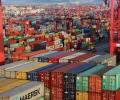
The country's exports jumped by 60.29 per cent to $34.45 billion in March even as the outbound shipments contracted by 7.26 per cent during the full 2020-21 fiscal to $290.63 billion. Imports too grew by 53.74 per cent to $48.38 billion in March, but dipped by 18 per cent to $389.18 billion during April-March 2020-21, according to the government data released on Thursday. Trade deficit during March 2021 widened to $13.93 billion from $9.98 billion in March 2020.

'Our factories are world-class and are becoming increasingly attractive for our global business leaders to use to serve other markets.'

The two directors of the company named in the FIR, however, still remain at large.

The zero-duty EPCG scheme is in addition to the 3 per cent EPCG scheme that was introduced last year.

The API of Paracetamol, a fever and pain medication, has grown 25 per cent from Rs 450-480 per kg in December 2020 to Rs 580-600 per kg in April. When compared to the pre-Covid prices of December 2019, the surge is much steeper -- around 140 per cent, reports Sohini Das.
Industry body Assocham on Tuesday said the Indian pharma industry would grow at 11 per cent to touch Rs 60,000 crore (Rs 600 billion) in 2007-08 from Rs 39,000 crore (Rs 390 billion) in 2003-04, when drugs worth $65 billion would go off patent.

Domestic customers will get access to high-quality Swiss products such as watches, chocolates, biscuits, and clocks at lower prices as India will phase out customs duties under its trade pact with the EFTA bloc on these goods over a period of time. India and the four-European nation bloc EFTA signed a trade and economic partnership agreement (TEPA) on Sunday to boost trade and investments between the two regions. The European Free Trade Association (EFTA) members are Iceland, Liechtenstein, Norway, and Switzerland.

Imports too tumbled by 58.65 per cent to $17.12 billion in April from $41.4 billion in the same month last year, according to the data by the commerce and industry ministry.

Imports too dipped by 23.1 per cent to $25.41 billion in the month under review as against $33 billion in April 2015.
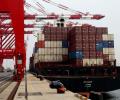
Demand will boom in the US and China, but exporters say it will be difficult for India to tap these markets.

A team of central agencies and the Uttar Pradesh drug department had carried out an inspection at the firm's office in Noida on December 29 and taken six more samples for testing.
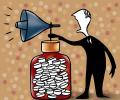
Indian drug firms get a shot in the arm in the $12 bn Australian drug market as the Therapeutic Goods Administration (TGA), Australia agrees to accelerate the drug approval process in that country for Indian players who already have an approved plant and product from one of the stringent regulatory authorities like US, EU or Canada. From current sales of $340 mn, the Indian firms can see a significant upside in sales; felt Dinesh Dua, former chairman of the Pharmaceutical Exports Promotion Council of India (Pharmexcil), and the MD of Nectar Lifesciences. He highlighted that only 12 percent of the Australian drug market is generic, as against 80-90 per cent in the US or EU. Of this $1.5 bn generic drug market in India, Indian companies have a small share.

Operating margins have been the primary driver of corporate earnings in India in recent quarters, despite revenue growth suffering from weak consumer demand. Companies across sectors have reported a sharp improvement in earnings before interest, tax, depreciation, and amortisation (Ebitda) margins over the past two years, benefiting from lower commodity and energy prices. Higher margins more than compensated for slower revenue growth, resulting in double-digit growth in net profit for five consecutive quarters.

Once tipped to emerge as the biggest exporter, the pharmaceutical industry is yet to acquire the scale of those in software services, says Krishna Kant.

The inspection at Marion Biotech started at around 12 pm and continued for over 10 hours during which six more samples of the syrup were taken, they said.

Both Putin and Zelenskyy have invited the prime minister to visit Russia and Ukraine respectively after the Lok Sabha elections, sources said, adding they see Modi as a "peacemaker".

These categories rank among India's top 10 export items by value.
Imports increased by 4.5 per cent, the highest growth in the last six months as crude oil and gold shipments shot up in the month.

An acute drug shortage in the US and stable pricing along with product launches are likely to boost revenues of India's pharmaceutical companies during the first quarter of this financial year, analysts said. Most brokerages estimate a top line growth of around 14-15 per cent, with earnings before interest, taxes, depreciation, and amortisation (Ebitda) growth of 24-30 per cent for Q1 of FY24. Hospitals are, however, likely to report lower occupancy rates, and diagnostics companies may witness an impact from delayed monsoon.

'It is time to allow the rupee to move towards its true value, as it is hurting Indian exports, investment and SMEs associated with export sectors that create jobs,' argues Pravakar Sahoo.
Sources in the know said the service tax paid by exporters on commissions paid to foreign agents was likely to be exempted. Foreign agents are responsible for getting orders from prospective clients based abroad. The move is likely to benefit all exporters, especially from textiles and pharmaceutical sectors. Exporters said the service tax on commission to foreign agents formed a major chunk of the tax paid by them.

The department of commerce has urged the agriculture ministry as well as the diplomatic mission in Tehran to apprise it of details as to why Iranian buyers have stopped import of rice and tea from India, a senior government official said. Exporters said that exports of items such as high quality tea and rice have stopped since last week. As of now, there has been no confirmation from the authorities and the response from the embassy in Tehran is also taking time, they said.

Of the Rs 1.97 trillion that the government intends to spend on all 14 production-linked incentive (PLI) schemes, around Rs 41,000 crore remains unutilised as of now, according to a senior government official. This means that 80 per cent of the total allocated amount, or Rs 1.56 trillion, will be used to pay incentives to companies eligible to claim benefits over the next few years. The unutilised amount/savings result from undersubscription, lukewarm responses in the case of schemes such as textile, as well as a reduction in the allocation of schemes.
China's API exports to India touched $3.3 billion last year, while Indian drugs struggled to post $500 million worth of exports to China.
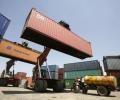
UN economists announced a likely USD 50 billion drop in the worldwide manufacturing exports in February alone as the extent of the damage to the global economy caused by the novel coronavirus (COVID-19) moved further into focus. Citing the China Manufacturing Purchasing Manager's Index (PMI), Pamela Coke-Hamilton, who heads UNCTAD's Division on International Trade and Commodities, said that it had fallen to 37.5 -- a drop of about 20 points -- the lowest reading since 2004. "This also correlates directly to exports and also implies a two per cent drop in overall exports," she said, with a resulting "ripple effect" worldwide "to the tune of a USD 50 billion fall in exports."
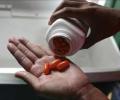
Various domestic companies such as Ranbaxy, Wockhardt and Agila Specialities recently came under the US FDA scanner for lapse in manufacturing practices.
The pharmaceutical and the consumer durables sectors, which depend on China for imports, have not been impacted yet due to unrest in China with people protesting against lockdowns. But the lockdown could have an impact on the supply of components used in consumer durables if it continues for the next fortnight. In the pharmaceutical industry, Indian players import 66-70 per cent of their bulk drug requirements from China.
Despite the 6-month high, trade deficit has widened to a four-month high of $14.62 billion, as imports rose by 14.85 per cent during the month, reports Subhayan Chakraborty.

Rathod said the Maharashtra government had initiated an inquiry against 84 out of 108 manufacturers of cough syrups in the state.

According to HSBC, India's current account deficit is expected to narrow from 1.1 per cent of GDP in 2014 to 0.6 per cent in 2015.

Many economists say only a substantial rise from October would point to a real recovery.

'Midcap and smallcap indices are trading in the expensive zone.'

The rupee breached the 80-mark against the dollar on Tuesday. The steady depreciation in the value of the rupee against the US dollar is likely to prove expensive for corporate India. The listed companies' revenue expenses in foreign currency or imports exceed their export revenues or revenue earnings in forex. In their latest financial year, BSE500 companies, excluding banks and non-banking finance companies and insurance (BFSI), reported combined forex expenses of Rs 12.31 trillion against forex earnings of around Rs 10 trillion.

Foreign Trade Policy: More incentives for exports, focus on ease of trading
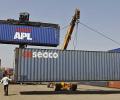
India's exports dipped deeper in the negative zone.

Exports from Ranbaxy plants at Toansa and Dewas to Europe will remain suspended as probes are continuing even as Indian authorities have withdrawn the certification of manufacturing standards from one of the units, European health regulator EMA said today.
